Crown Prince Reza Pahlavi
Early Life and Birth
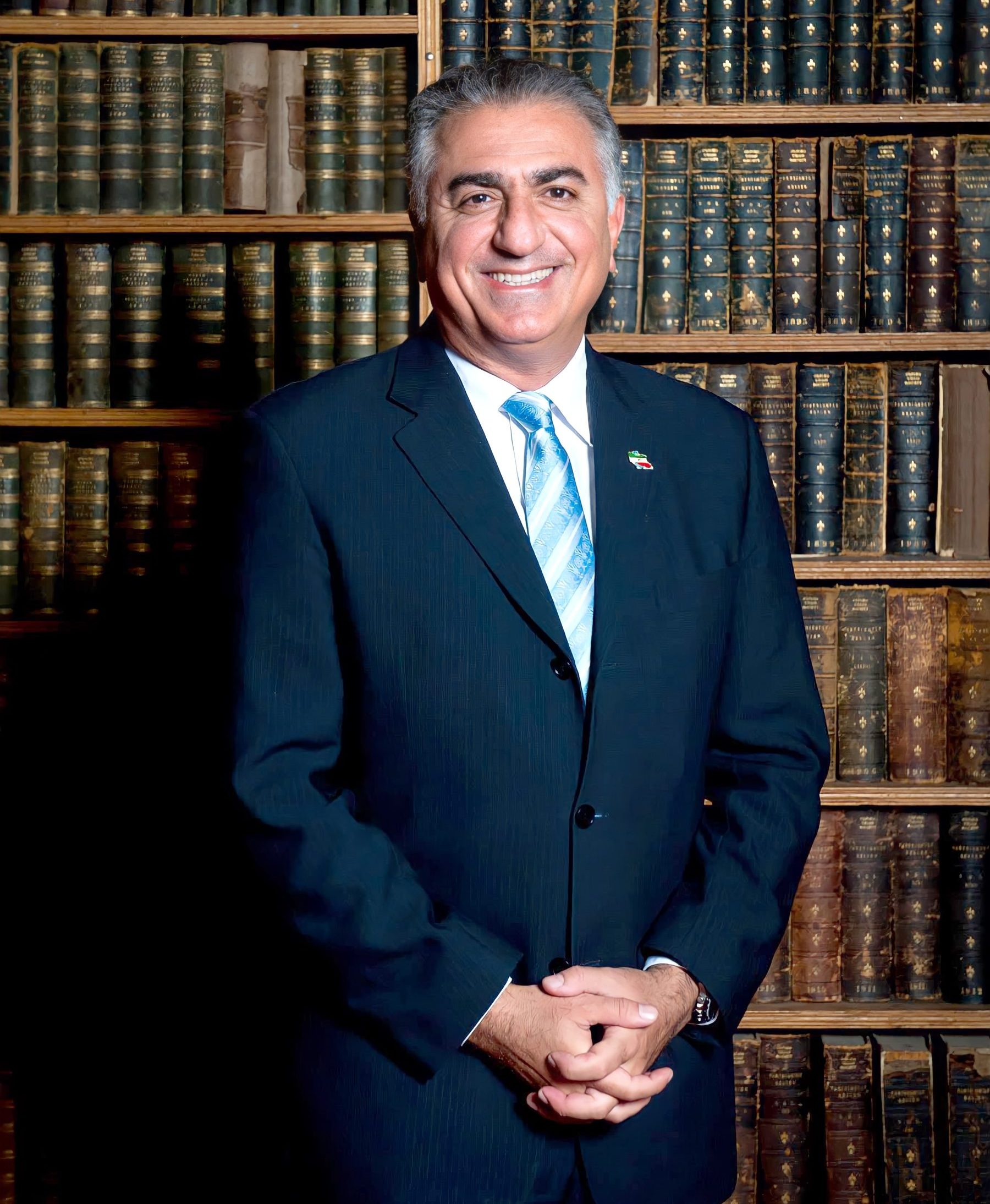
H.I.H. Crown Prince Reza Pahlavi was born in Tehran on October 31, 1960, as the eldest son of Shah Mohammad Reza Pahlavi and Empress Farah Pahlavi. At birth, he was officially designated Crown Prince and heir to the Pahlavi throne. However, the Iranian Revolution of 1978–79 forced the royal family into exile, dramatically altering his early life. Consequently, much of his childhood and education took place outside Iran, shaping his future as a global advocate for his homeland.
Education and Military Training
After leaving Iran at age 17, Reza Pahlavi pursued pilot training in the United States. Meanwhile, he continued his studies, earning a degree in political science from the University of Southern California. During the Iran–Iraq War, he even volunteered to serve as a fighter pilot for Iran, although the clerical regime did not permit him to join. As a result, he focused on education and public service, preparing for a leadership role in advocating for Iran’s future.
Exile and Advocacy
Since the revolution, Reza Pahlavi has lived primarily in the United States while emerging as a prominent advocate for freedom, democracy, and human rights in Iran. Furthermore, he consistently speaks out against the oppressive policies of the Islamic Republic. In addition, he encourages peaceful civic engagement and reform, emphasizing dialogue over conflict. As a result, he has become a symbolic figure for Iranians both inside the country and in the diaspora.
Advocacy for Freedom and Democracy
Furthermore, he has emerged as a prominent advocate for freedom, democracy, and human rights. As a result, he consistently speaks out against oppression under the Islamic Republic and encourages peaceful reform through civic engagement.
International Engagement
Beyond his advocacy, Reza Pahlavi travels internationally to meet with world leaders, legislators, and supporters of democratic change. Through these efforts, he works to raise awareness about Iran’s challenges while promoting the values of democracy and secular governance. Moreover, he highlights the historical legacy of the Pahlavi Dynasty and its contributions to modern Iranian identity. Consequently, his public role continues to inspire those seeking a peaceful, democratic future for Iran.
Legacy and Symbolism
Although he does not hold a formal political position, Crown Prince Reza Pahlavi remains an influential figure for many in the Iranian diaspora. His life, shaped by both exile and advocacy, symbolizes the enduring connection between modern Iran and its historical monarchy. In addition, his work ensures that the legacy of the Pahlavi Dynasty remains part of contemporary discussions about Iran’s cultural and political future.
In addition to numerous articles, Reza Pahlavi has written three books, on the state of affairs in Iran: Gozashteh va Ayandeh (Kayhan Publishing, 2000); Winds of Change: The Future of Democracy in Iran (2002); and IRAN: L’Heure du Choix [IRAN: The Deciding Hour] (Denoël, 2009).
Reza Pahlavi has lived in exile since 1978. He married Yasmine Etemad-Amini on June 12, 1986. They have three daughters: Noor Pahlavi (April 3, 1992), Iman Pahlavi (September 12, 1993), and Farah Pahlavi (January 17, 2004).
Yasmine is a graduate of The George Washington University School of Law with a Doctorate in Juries Prudence. She was admitted to the Bar and practiced for ten years as a lawyer, for the Children’s Law Center, as a legal advocate for at-risk youth. Yasmine also founded the Foundation for the Children of Iran (FCI) in 1991. FCI, a non-profit foundation, provides complex, life-saving, free healthcare services to indigent Iranian children.
Family
Spouse
Yasmine Etemad-Amini (July 26, 1968)
Issue
Noor Pahlavi (April 3, 1992)
Iman Pahlavi (September 12, 1993)
Farah Pahlavi (January 17, 2004)
Siblings
Princess Shahnaz Pahlavi (October 27, 1940)
Princess Farahnaz Pahlavi (12 March 1963)
Prince Ali-Reza Pahlavi (28 April 1966 – 4 January 2011)
Princess Leila Pahlavi (27 March 1970 – 10 June 2001)