Jashn-e Tirgan
Jashn-e Tirgan
Jashn-e Tirgan, also known as the Festival of Tirgan, is one of the oldest and most cherished celebrations of ancient Iran. Rooted in Zoroastrian tradition and Persian mythology, the festival is observed each year during the month of Tir and honors the life-giving gift of water, the blessing of rain, and the enduring spirit of hope and unity.
For thousands of years, Tirgan has been celebrated by Iranians as a joyful occasion marked by family gatherings, music, poetry, colorful ribbons, and the playful tradition of sprinkling water upon one another. The festival reflects the deep respect that ancient Iranian civilization held for nature and the essential role that water played in sustaining life.
The Legend of Arash the Archer
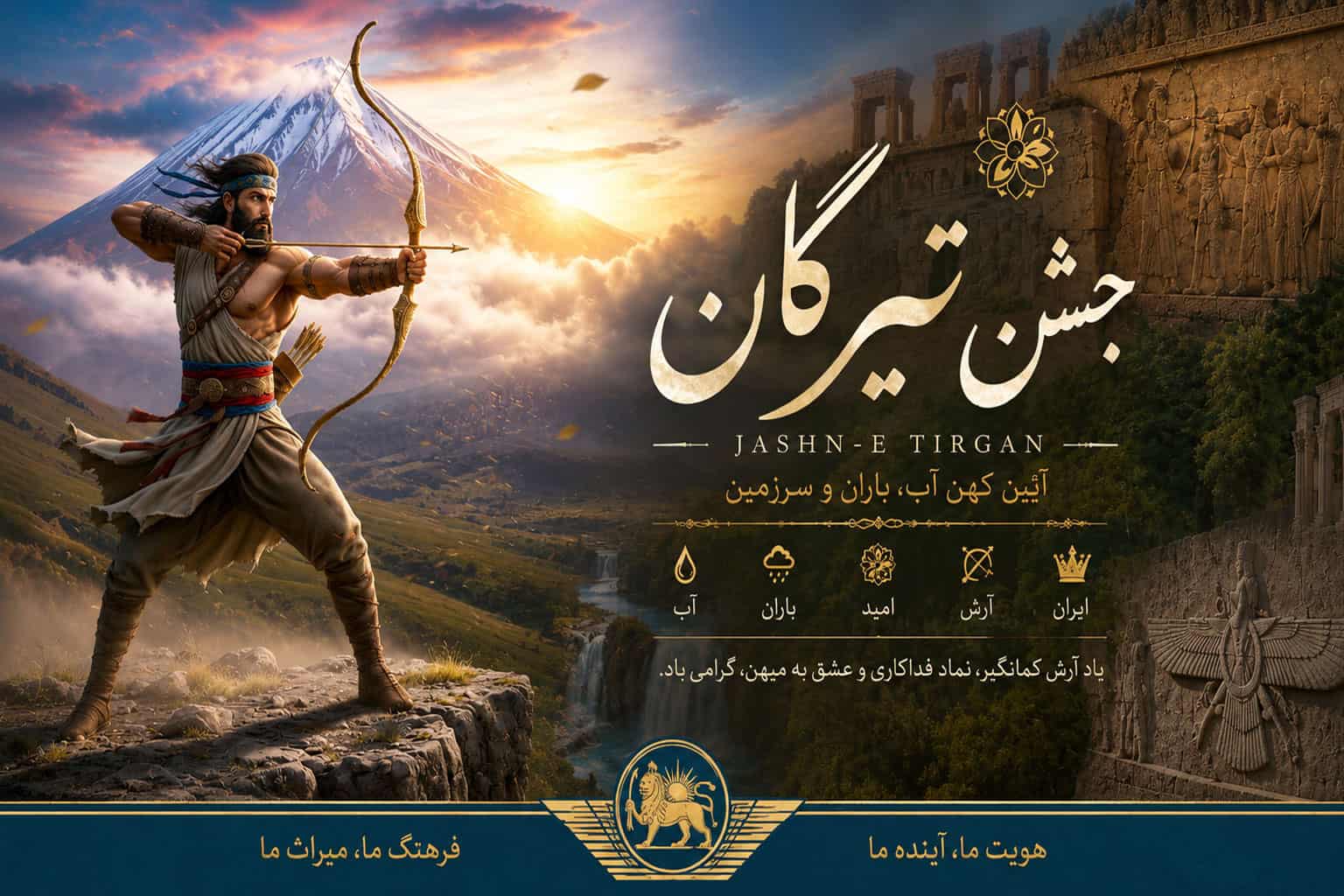
At the heart of Tirgan lies the legendary story of Arash the Archer, known in Persian as Arash-e Kamangir, one of the greatest heroes in Persian mythology.
According to the ancient epic, after years of conflict between Iran and Turan, both kingdoms agreed that a single arrow would determine their common border. Arash, chosen for his unmatched courage and devotion to his homeland, climbed the summit of Mount Damavand at sunrise.
Gathering all of his strength, he released a single arrow that soared across mountains, valleys, and rivers before finally landing hundreds of miles away along the banks of the Oxus River. The arrow established the new frontier of Iran, bringing peace between the two nations.
The immense effort required every ounce of Arash's life force, and after releasing the arrow, he gave his life for the freedom and future of his country. His sacrifice has since become a timeless symbol of patriotism, selflessness, and devotion to Iran.
The Celebration of Water
Water has always held a sacred place in Iranian civilization. Ancient Persians regarded rivers, springs, and rainfall as divine blessings, protected by Anahita, the revered goddess of water, fertility, and purity.
During Tirgan, people traditionally visited rivers and streams, offered prayers of gratitude, and celebrated the life-giving power of water. One of the festival's most beloved customs is gently sprinkling water on friends and family, a joyful gesture symbolizing purification, renewal, prosperity, and good fortune for the year ahead.
The Seven-Colored Tir-o-Bad Ribbon
Another enduring tradition of Tirgan is the wearing of the Tir-o-Bad ribbon, woven from seven brightly colored threads.
The ribbon is tied around the wrist for several days before being released into the wind or flowing water while making a wish. The custom symbolizes the harmony between humanity and nature and the hope that favorable winds and rains will bring abundance and happiness.
A Living Heritage
Although centuries have passed, Tirgan continues to be celebrated by Zoroastrian communities and by Iranians around the world who cherish their country's rich cultural heritage.
The festival serves as a reminder that Iran's history extends back thousands of years through traditions founded upon respect for nature, courage, generosity, and the pursuit of peace.
Preserving Iran's Ancient Traditions
Jashn-e Tirgan stands as a living testament to the enduring spirit of Iranian civilization. Through its legends, customs, and celebrations, the festival connects generations of Iranians to a shared cultural identity that has survived the passage of time.
As we celebrate Tirgan today, we honor not only the heroism of Arash and the sacred gift of water, but also the timeless values of unity, hope, resilience, and love for Iran, values that continue to inspire Iranians throughout the world.
Happy Jashn-e Tirgan!
May the blessings of water, peace, and prosperity be with all Iranians, wherever they may be.